With all of the recent flooding in our area, RocSubway reader Michael Delaney wrote in and suggested, “a great idea for an article would be about the history of flooding in Rochester and the civil engineering that has gone into solving the issue. Beyond the dams, I’ve heard that there are huge storm sewer tunnels underneath the city. It would be very interesting to know more about it.”
Situated at the intersection of the Genesee River and Erie Canal, Rochester’s geography has blessed—or cursed—us with a long long history of great floods. Before the construction of the Mount Morris Dam (1948-1952) records indicate the City of Rochester had experienced severe flooding about every seven years between 1865 and 1950. Talk about a pesky problem.
Digging into all of the engineering marvels that have spared modern Rochesterians from most of these high waters could easily span many pages. And I promise to dedicate future posts on the subject. But for now, I want to show just how bad this problem was by highlighting just one flooding disaster that occurred in late March, 1913…
In part one of our three part Charlotte bonanza, we looked briefly at the history of Charlotte, from its formation in 1792, through its resort years and annexation in the early 20th century. In part two, we’ll look at Charlotte as it is today. Let’s start with the lay of the land. Shown above is the official definition of the city’s neighborhoods. As you know, Charlotte is the one at the top. Zooming in (and switching to Google maps) here’s what we see…
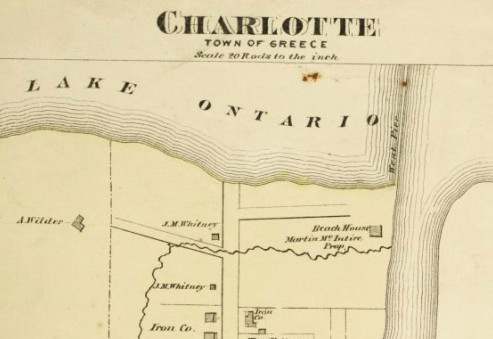
Welcome, readers, to the first of a three part series on Charlotte. This first part will serve as an introduction to the series and a brief history of Charlotte. The second part will be a survey, in the engineering sense, of the current state of Charlotte. It will include the demographics of the neighborhood and the built environment, as they exist today. Finally, the third part will layout a vision for Charlotte that works to harness all of the potential of the neighborhood. This final part will be broken into recommendations for residential and commercial development, transportation, and governance.
The plans described here will be ambitious, but we shouldn’t let ourselves shy away from ambition – as you may know, Charlotte has recently been in the news over some redevelopment plans. While Filling-In believes both plans have virtues, they both have numerous weaknesses as well. Because we are unassociated with any of the plans currently in play, and will believe they are built when we see it, the plans presented here will assume they did not happen, and instead will show a different vision of Charlotte’s future.
Rochester’s beloved Hojack Swing Bridge has been gone for more than a year, but now a new exhibit at the New York Museum of Transportation will honor the history of the former Rochester landmark. The exhibit is a re-creation of the bridge’s control cabin and contains the original steam engine, control devices, and a working model of the bridge…
No, the headline isn’t in reference to the recent controversy surrounding the port development. I wanted to take a look back, at the “good ole days,” when Ontario Beach was known as the Coney Island of central and western New York. Here’s a birds eye of view of all the shiny happy fun… The Dentzel carousel. The L.A. Thompson’s Scenic Railway. The Auditorium (a.k.a. the House of Hilarity). Such good times.
Then I noticed the peculiar site of smoke and flames in the background (click the image for a larger view). Holy smokes! Charlotte is burning! Somebody call 9-1-1!!
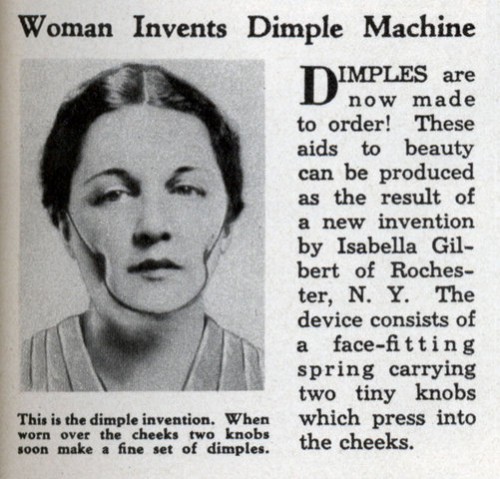
Who doesn’t find dimples irresistible? In 1936 Isabella Gilbert of Rochester NY invented a spring-loaded contraption that promised to “make a fine set” by pressing a pair of knobs into the cheeks.
Well I’d say that’s another one for the long list of groundbreaking innovations at Rochester Made . Thanks to Vicki Robinson for posting this fun fact to the RocSubway wall
Many of you kids will be too young to remember this – thank heavens. But five years ago on this very day, Rochester NY made national headlines when it was slammed by one of the worst food shortages in our nation’s history—possibly the world. That’s right. Popeyes up on Lake Ave ran out of chicken…
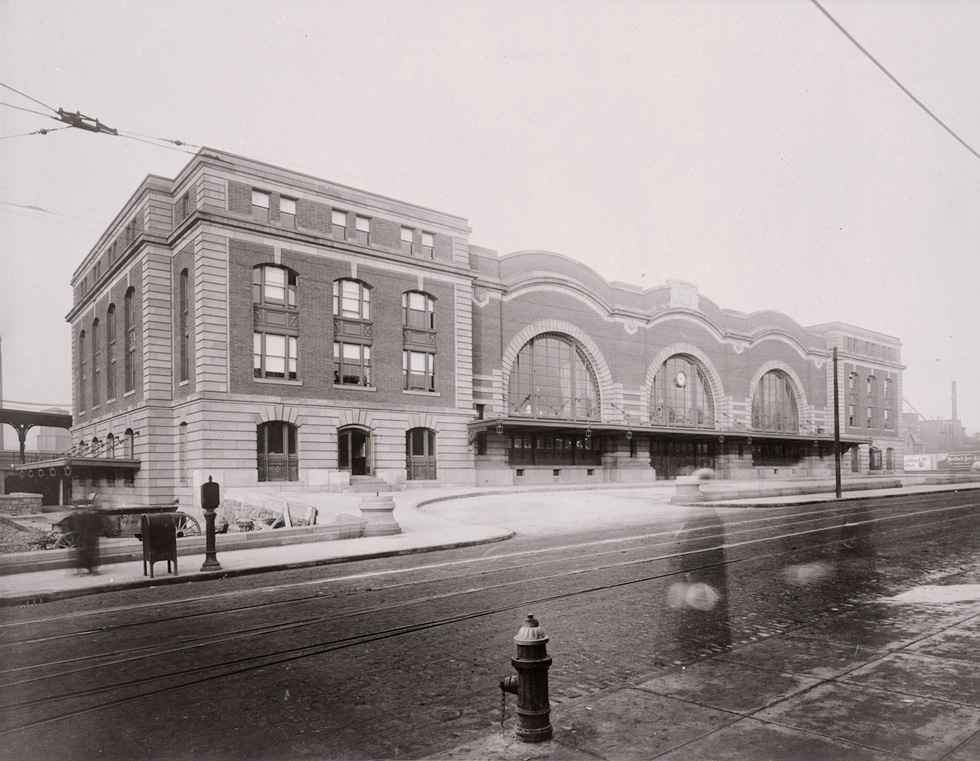
The last remnants of Rochester’s third New York Central Railroad Station, designed by noted architect Claude Bragdon, were demolished almost forty years ago. Now a team of researchers at the University of Rochester is seeking assistance from the local community to help restore the station’s memory…
The other day my three-year-old was shooting video of his stuffed animals with his big sister’s iPad, and a wave of nostalgia crashed over me. I suddenly realized my kids will probably never get to experience joy of film photography. They’ll never understand the thrill of loading a fresh roll into the back of a camera. They’ll never feel those mechanical clicks and vibrations of the film advancing to the next frame. And they’ll never know the excitement of getting a stack of pictures back from the developer.
How would I even explain this antique technology to them? I know, I’ll Google it. Hey what do you know, here’s an old manual for the Kodak Brownie Camera (No. 2)…
A RocSubway reader is looking to sell this old Rochester “Wheeler Dealer” board game ($50)*. Wheeler Dealer is a game of two parts. First, players travel the world while buying, selling, bargaining and trading products. In part two those products are sold back to the bank or auctioned to the highest bidder. Licensed versions of the game were produced for many cities around the world in the 1980s, including this one for Rochester…
Friday, March 18, 1910. 1:55 P.M. – President Taft, on his way to Rochester from Chicago, makes a quick stop in Buffalo. He steps off the train to greet an exclusive few; the leaders of Buffalo, including their recently elected mayor, Mr. Louis P. Fuhrmann (an avid baseball fan), some newspaper reporters, Mr. George Dietrich, the Chamber of Commerce President of Rochester, and last but not least, Rochester Mayor Hiram H. Edgerton. After a few minutes of smiles and handshakes, Taft who was reportedly exhausted from his stay in Chicago, is ready to get back on the train car where he can sit, and (hopefully leisurely) talk to some new faces, Mr. Dietrich and Mayor Edgerton…
Last week we looked at some photos of the Beebee Station power plant at High Falls. That post drew some comments about another interesting facility nearby which is sometimes confused with Beebee; the City’s old garbage incinerator plant on Falls Street .
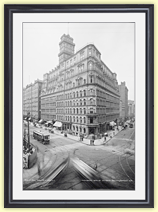
Check out this great photo of the Powers Building from 1968. Notice the workmen up on the ledge of the Mansard roof. Down at street level a shiny new, streamlined façade as been awkwardly forced on top of this 1869 building…
If you’re a true Rochesterian you’ve probably taken many trips to Donuts Delite. And if you’ve sat in the dining room (and looked down past your doughnut-filled belly) you may have noticed a cute little milkmaid hauling her yoke and buckets full of milk across the floor.
I was curious to know how she got there and what her significance was. Of course I know milk is an ingredient in doughnuts, but it just seemed like an odd symbol to be used to represent doughnuts. There must be a story behind it…
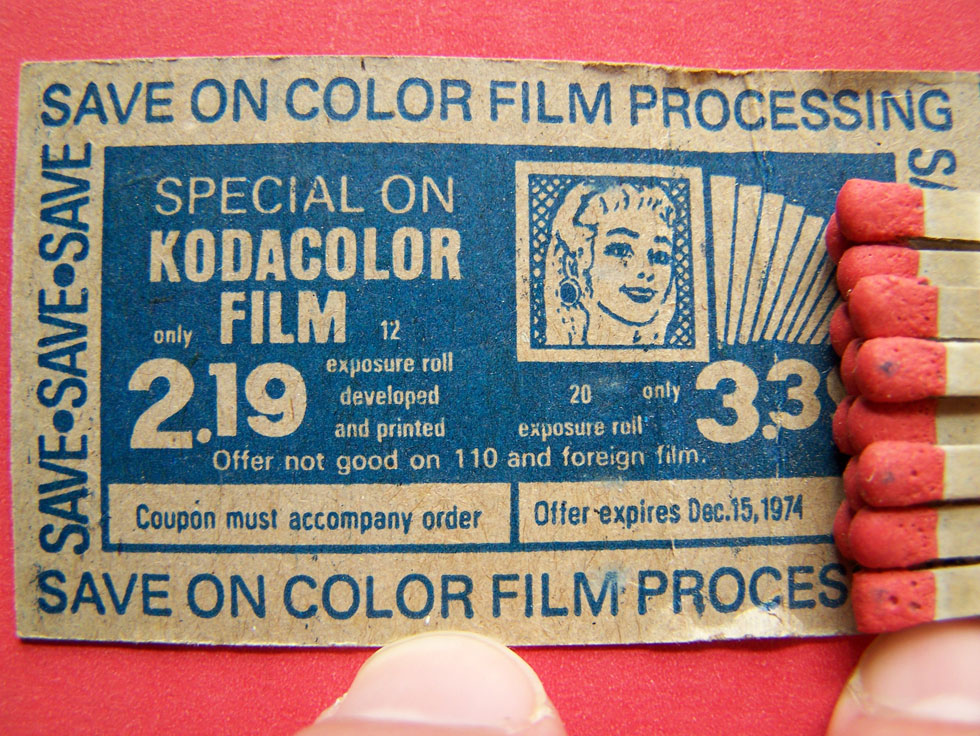
Here’s a neat little collection of Rochester memorabilia. Matchbooks! Remember when you could buy cigarettes out of a vending machine like soda pop, and just about every business had it’s own matchbooks? Ah, those were the days * COUGH * COUGH * WEEZE * EHK! EHK! HEM… HEEEM!
These were sent to me by a reader. He says he’s not a smoker, but he’s collected them since he was a kid. And now he’d like to sell them. So if you’re interested in local oddities like this, drop me an email and we’ll hook you up with one… or the entire set.
Some of the matchbooks date from the late 1950s and early 1960s. But we think most of them are 1970s & 80s. Check them out for yourself. If you’ve lived in Rochester for any length of time you’ll probably recognize most of these businesses…
Walter has been a fixture at local sporting events and concerts for decades. Known to most Rochesterians as “The Accordion Man,” Walter plays his squeezebox (and sings) outside most hockey, basketball and lacrosse games… at music events all around the city… and of course, a Redwings game would not be the same without Walter’s rendition of Take Me Out To The Ballgame playing in the background as fans line up at the turnstiles.
In a recent phone conversation with him, Walter told me he’s been playing around Rochester for three decades. He’s missed only one game in the past 15 years. And he’s gone through 83 accordions. His latest one is currently out of commission with broken keys and a worn strap…
Rochester’s landmark Holy Rosary Church and Catholic school complex at Lexington and Dewey Avenues has been rehabilitated for new residential units and a large community space in the former church. The $15 million project by Providence Housing Development and SWBR Architects was made possible with equity provided by Enterprise Community Partners, City home-renovation grants & loans, and a payment in lieu of taxes agreement.
At the time of the groundbreaking in August 2012, Congresswoman Louise Slaughter praised Providence Housing for bringing “affordable, attractive housing to a community that eagerly awaits such good news.” Well, wait no more. The ribbon was cut this past November, and the historic church buildings have emerged as 60 units of much needed affordable housing and community space…
Last month RocSubway Facebook fans brought us rumors of a new grocery store for downtown Rochester (those rumors turned out to be true). Now comes an equally exciting rumor from RocSubway that has also checked out. John Tachin, owner of Mr. Dominic’s restaurant in Charlotte has purchased the former Lakeshore Drive-In site and is considering plans to reopen it as a drive in movie theater…
In 2012 we were surprised to learn that RGRTA had dug up the foundation of the RKO Palace Theater while excavating for the new transit terminal. This week, Jim Memmott reported on some more fantastic treasures that were unearthed at the same site. Some time last year seven heavy stones (some weighing a ton) were pulled up from depths of up to 30 feet below street level. Each stone bore a symbol of the Freemasons…
Like, WOW! I stumbled upon this concept for an elevated transit terminal in a 1967 D&C article. The drawing shows how Rochester Transit Corporation president William Lang envisioned passengers would wait for their bus – suspended above the intersection of Main & Clinton. This view is looking east toward Clinton Avenue with Sibley’s in the background…
Get Email Updates...
Stay up-to-date on Rochester-related stories, artifacts, and ideas that you won't find in the mainstream news.
Totally free, never spammy, and you can unsubscribe at any time.
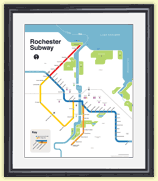
After the Erie Canal was rerouted south of downtown Rochester, the Rochester
Industrial & Rapid Transit Railway (the “subway”) was built in
its place as a link between the five different railroads and interurban trolley
lines that served the Rochester area. As the industrial landscape of Rochester
changed, and highways replaced the railroads, the Rochester subway gradually
became a relic of a bygone era. In 1956 the subway was abandoned and much of
its route was converted into Interstate 490 — built to connect Rochester
with the New York State Thruway (I-90). Read more about the history of the Rochester Subway.
RochesterSubway.com exists to help spark
public dialogue around how we can better connect the neighborhoods of Rochester
NY, surrounding communities, and their cultural offerings. Rochester’s
future is written in her past. Let's rediscover it.
















![A large crowd is gathered on Front Street to look at the flood at the other end of the street. Varlan's Hotel, Rosenberg's Pawnshop, Charles Adam's Sons Grinding, J.G. Zweigle's Sons, W.T. Bridle Furniture, William Pigeon Shoes, Hyman Davis Shoes, Genesee Provision Company, Myers Department Store, and the F.H. Loeffler Company are visible in the photo. March, 1913. [IMAGE: Albert R. Stone]](https://www.rochestersubway.com/images/photos/rochester-ny-flood-march-1913-01.jpg)
 in our area, RocSubway reader Michael Delaney wrote in and suggested, “a great idea for an article would be about the history of flooding in Rochester and the civil engineering that has gone into solving the issue. Beyond the dams, I’ve heard that there are huge storm sewer tunnels underneath the city. It would be very interesting to know more about it.”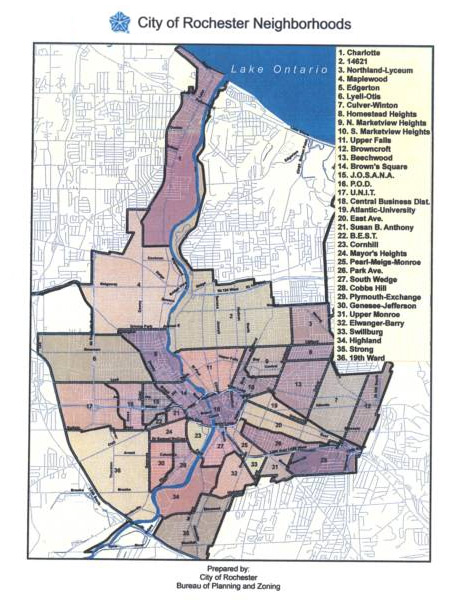
![The control room of the Hojack Swing Bridge has been recreated at the NY Museum of Transportation. [PHOTO: Flickr, M J M]](https://www.rochestersubway.com/images/photos/hojack-swing-bridge-mjm.jpg)

![On this date five years ago today, the Popeyes chicken chain in Rochester NY made national headlines when it ran out of its featured product. [PHOTO: TripAdvisor.com]](https://www.rochestersubway.com/images/photos/popeyes-runs-out-of-chicken-01.jpg)
![Picture taking with the Brownie camera no. 2. Published 1918 by Canadian Kodak Co. [SOURCE: OpenLibrary.org]](https://www.rochestersubway.com/images/photos/kodak-brownie-camera-manual-_Page_01.jpg)
![Wheeler Dealer board game, Rochester edition. c1980. [PHOTO: Laurie Dirkx]](https://www.rochestersubway.com/images/photos/rochester-wheeler-dealer-board-game-01.jpg)
![Rochester's Mayor Hiram Edgerton inspecting a baseball at the opening game, May 7, 1912. [PHOTO: Albert R. Stone]](https://www.rochestersubway.com/images/photos/history-of-the-first-pitch-rochester-01.jpg)
![The Garbage Incinerator at High Falls, Rochester. [PHOTO: Robert Cunningham]](https://www.rochestersubway.com/images/photos/rochester-garbage-incinerator-plant-00.jpg)
![The Powers Building at Main & State Streets, 1968. [PHOTO: Winters, via Library of Congress]](https://www.rochestersubway.com/images/photos/powers-building-rochester-1968.jpg)
![An Art-Deco style milkmaid is depicted in the floor of Donuts Delite, Rochester NY. [PHOTO: RochesterSubway.com]](https://www.rochestersubway.com/images/photos/donuts-delite-milkmaid-rochester.jpg)
![Walter, Rochester's accordion man, performing underneath the Freddie-Sue bridge in Corn Hill as a crowd gathers for the Eddie Money 'Party in the Park' concert [PHOTO: Jeff Gerew, C7Photo.com]](https://www.rochestersubway.com/images/photos/rochester-accordion-man-walter-palmer-01.jpg)
![Holy Rosary Church, Rochester NY. 1923. [PHOTO PROVIDED BY: Preservation Studios]](https://www.rochestersubway.com/images/photos/holy-rosary-church-rochester-07.jpg)
![The marquee sign at the former Lakeshore Drive-in Theatre in Greece, NY. [PHOTO: NewYorkDriveIns.com]](https://www.rochestersubway.com/images/photos/rochester-lakeshore-drive-in-movie-theater-marquee.jpg)
![A stone from the Masonic Temple that once stood at Clinton Avenue and Mortimer Street. [IMAGE: RGRTA via Democrat & Chronicle]](https://www.rochestersubway.com/images/photos/stone-from-masonic-temple-rochester.jpg)
![A concept by RTC president William Lang for a central transit terminal at Main & Clinton, Rochester NY. [IMAGE: Democrat & Chronicle, January 29, 1967]](https://www.rochestersubway.com/images/photos/rochester-central-transit-terminal-concept-1964.jpg)