This former Rochester Plumbing Supply building at 281 Mill Street has recently been renovated and converted into 14 new apartments in downtown’s growing High Falls district. This is an exciting development not only because of the new life it will add to this neighborhood, but because this building has a pretty sweet past…
Consider this a lightweight palette cleanser in the middle of the five course, multi-month feast that is the zoning series. Even so, it’s deeply related to zoning, so you’re not getting off that easy. Read on if you dare (Halloween pun intended!).
Goodbye houses, hello something more! Having already discussed the city’s 3 residential zones, it’s time to talk about its 3 mixed-use zones. In one of the many progressive moves in the 2003 re-zoning, Rochester moved away from pure commercial use zones by adding mixed use and residential uses to the (formerly) commercial zones. The narrative descriptions changed, but the letter designations did not. Anyway, ditch the bowtie, grab a monocle and let’s go…
On my almost daily walk along State and Main streets I’ve often noticed this boom lift blocking the sidewalks around the Powers Building . I’ve never given it much thought. I just figured Daniel Powers liked his windows really clean.
Then, last week while at the Fringe, my RocSubway teammate Joanne Brokaw got introduced to Scott Grove. As it turns out, Scott is that guy hanging high up over Rochester’s sidewalks—and he’s not cleaning windows…
Hope your heart is still racing from our introduction to Zoning last week, because this week we’re talking about residential zoning in Rochester!
Contrary to common knowledge, residential zoning isn’t exclusively for residences (nor is commercial zoning exclusively for commercial – it’s a good place to build apartments, in fact). That said, Rochester has 3 specific residential zones that we’re discussing here. Grab your bow tie and let’s go…
Over the past year I’ve been itching to move downtown (“Oh, you live really downtown” is the common response upon mentioning my address). This past spring I finally ripped the bandaid and moved out of my mom’s house. In the month between choosing where to live and moving in, I scoped out my new neighborhood nearly every day. It was always obvious that surface parking lots dominated the usable land in the St. Joseph’s Park neighborhood, or as I like to call it, St. Joseph’s Parking Lot. What shocked me was one particular lot that never saw a car. Morning, noon, and night I drove by the lot on the Northwest corner of the intersection at Franklin & Pleasant Streets . Every time there sat only a rusty chain and two cones across the entrance…
Well readers, this is it. The series of articles you’ve been waiting for your entire life without even knowing it. That’s right, we’re going to talk about zoning, and more specifically, zoning in Rochester. I’ve been known to refer to zoning as the last bastion for the wicked, and over the next few weeks, I look forward to pleading my case.
Welcome back, readers – it’s been a while! But now that summer is drawing to a close, and we’re starting to stock up for the long winter ahead (wouldn’t want to be THIS guy ), it’s time to start Filling In again. For our first discussion, let’s revisit Aldi. When we last wrote about it, Mike was advocating for getting good design, and I was putting forward a couple ideas about how the store might improve its relationship with the neighborhood . “Fine,” you say, “where is this going?” Well I’m glad you asked.
This is Rochester’s fruit belt, and the inspiration behind a new collaboration between Greentopia and Shawn Dunwoody. The Fruit Belt Mural Project aims to transform one of Rochester’s most challenged neighborhoods (JOSANA, in the northwest quadrant) through art…
I’ve always been a fan of Rochester Subway content which looks at our city from a different angle. I thought I might contribute something in turn, that looks at our city from an aerial angle.
I noticed this week that Google Earth had updated its imagery to include snapshots from as early as a month ago. It is now possible to follow a lot of tangible changes that have been going on in the city for a while. I put together a handful of before-and-afters that I thought were interesting (to me anyway). Take a look at the album and see if you can spot the differences…
I received an email last week from George Conboy, Chairman of Brighton Securities. He asks, “Have you seen anywhere a photo of the transportation mural that was behind the long ticket counter at the old airport? I remember it as a vaguely Art Deco theme of general transportation with an emphasis, of course, on air transport.”
Mr. Conboy explained that he used to fly a lot during the “glory days” of air travel back in the 1960s when he was a kid. “I just liked that old mural. I used to see it all the time and it has always been in my mind.”
This is a great question. I had been told of this mural before but have never seen it myself. Photos of it online are practically non-existent, so this one will require some digging…
Since 1955, Camp Haccamo has been a fun filled getaway for both adults and children with varying mental and physical disabilities. First established on Panorama Creek Drive in Penfield (just behind Panorama Plaza), Haccamo was free to the 300 plus campers per year who participated. But in 2009 camp organizers ended their relationship with the town of Penfield and moved to Rush, NY – while, oddly, leaving quite a bit of stuff behind…
In 1867 Gustav Dentzel founded the Dentzel Carouse Company in Philadelphia, PA. In 1905, Gustav’s “Duchess” menagerie carousel opened at Ontario Beach Park where it has since entertained many generations of Rochesterians.
Recently, a debate has erupted concerning one of the ride’s painted panels; two black children—or more accurately, picaninnies—being harassed by a rooster. Stereotypical depictions of black children such as these were intended to dehumanize blacks and provide entertainment for whites at their expense. There’s no debate here. It is what it is. The question is what do to with the panel…
Some have called for it to be removed or replaced with something different. Others believe it should be preserved – either in place, or in another setting where it can be used to educate future generations about America’s history and the pitfalls of racism and bigotry.
Bill Dentzel is the great-grandson of Gustav Dentzel. In a letter to Rochester’s Preservation Board dated August 4, 2015, Bill suggests that the panel may be moved, but should not be discarded as “garbage”…
For those in the Rochester community who have a hard time understanding why the Dentzel carousel painted picaninny panel disallows African-American families and children from a carefree experience at Ontario Beach Park, I encourage you consider that you are not the butt of the joke…
The fourth First Niagara Rochester Fringe Festival (Thursday, September 17 – Saturday, September 26) announced its complete lineup this week at its annual BIG REVEAL at The Little Theatre. The 2015 Fringe will include more than 500 performances and events (up from 2014’s 380) featuring all genres of art in 25+ venues in downtown Rochester, with more than 120 of them offered free of charge. The full schedule is available and all tickets are on sale as of now at RochesterFringe.com …
The complex of the Rochester Psychiatric Center (a.k.a. Rochester State Hospital or Monroe County Insane Asylum) is legendary among urban explorers and history fanatics alike. Originally built in the early 1800s as the Monroe County Almshouse (or poorhouse), new buildings and facilities were gradually added to care for the mentally ill.
Although the hospital still operates to this day, a few buildings were closed in the mid-1990s and now sit in various states of decay. One notable example we’ve explored previously is the towering 16-story Terrence Building which looms over Elmwood Avenue. Another is the sprawling Walters Building (originally known as the Orleans Building) which we’ll be exploring today…
A good friend of mine, Ander Kazmerski , just posted some sweet drone footage of Rochester. The video focuses on two sites – the Rochester subway and the Carnegie building on Goodman Street just after its devastating fire. I don’t think I need to say much about it. These images speak for themselves. You’ll definitely want to go full-screen with this one…
Yesterday we took a bike ride down inside the Inner Loop with Matthew Ehlers to see how Rochester’s “big fill” was progressing. Quite nicely I’d say. But once filled, the next question becomes, what will fill the void.
RocSubway reader Ben Voellinger pointed us to a recent document posted to the City’s website that outlines recommendations for future development(s) along the new Union Street. Thanks Ben! Let’s take a look…
I noticed grass growing on the piles of dirt in the Inner Loop construction project today. It’s as if nature can’t wait for the filling in of the Inner Loop to complete before reclaiming the land…
Here’s an interesting video we stumbled upon while diddling around on YouTube this weekend. This 7 and a half minute long interpretive dance exploration of the Rochester subway tunnel will totally blow your mind. Grab some popcorn and roll film…
Get Email Updates...
Stay up-to-date on Rochester-related stories, artifacts, and ideas that you won't find in the mainstream news.
Totally free, never spammy, and you can unsubscribe at any time.
After the Erie Canal was rerouted south of downtown Rochester, the Rochester
Industrial & Rapid Transit Railway (the “subway”) was built in
its place as a link between the five different railroads and interurban trolley
lines that served the Rochester area. As the industrial landscape of Rochester
changed, and highways replaced the railroads, the Rochester subway gradually
became a relic of a bygone era. In 1956 the subway was abandoned and much of
its route was converted into Interstate 490 — built to connect Rochester
with the New York State Thruway (I-90). Read more about the history of the Rochester Subway.
RochesterSubway.com exists to help spark
public dialogue around how we can better connect the neighborhoods of Rochester
NY, surrounding communities, and their cultural offerings. Rochester’s
future is written in her past. Let's rediscover it.







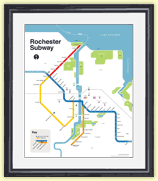

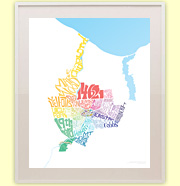
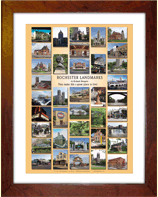








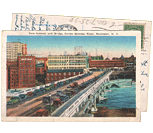
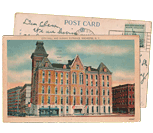
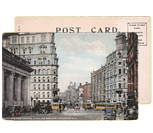
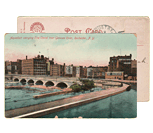



![The former Rochester Marshmallow Company factory located in the High Falls District. [PHOTO: India Lombardi-Bello]](https://www.rochestersubway.com/images/photos/rochester-marshmallow-company.jpg)
 has recently been renovated and converted into 14 new apartments in downtown’s growing High Falls district. This is an exciting development not only because of the new life it will add to this neighborhood, but because this building has a pretty sweet past…
![This is to inform you that a public hearing has been scheduled for [37 Eagle Street]](https://www.rochestersubway.com/images/photos/denker/37eagle/37_Eagle_Street_Postcard.jpg)
![The Flatiron Building - The highest of the highs in C-1. [IMAGE: Mike (M J M), Flickr.com]](https://www.rochestersubway.com/images/photos/flatiron-building-night-01.jpg)
![Meet Scott Grove, a Rochester artist, sculptor, furniture designer, architectural preservationist, among other things. [PHOTO: RochesterSubway.com]](https://www.rochestersubway.com/images/photos/scott-grove-powers-building-maintenance-01.jpg)
![34 Atkinson Street - An utterly illegal house to build today. [IMAGE: Google]](https://www.rochestersubway.com/images/photos/denker/zoning/34_Atkinson_St.jpg)
![An empty parking lot in downtown Rochester at Franklin & Pleasant Streets. [PHOTO: Young Urban Preservationists]](https://www.rochestersubway.com/images/photos/parking-day-2015-02.jpg)
![Current Rochester Zoning Map [IMAGE: City of Rochester]](https://www.rochestersubway.com/images/photos/denker/zoning/Rochester_Zoning_Map.jpg)
![Aldi Sign [Image: Matzo Electric Signs]](https://www.rochestersubway.com/images/photos/denker/aldi/Aldi_Sign.jpg)

![Satellite before & after image of Rochester. [IMAGE: Google Earth via Nick Russo]](https://www.rochestersubway.com/images/photos/rochester-satellite-before-and-after-midtown-plaza.gif)
![Do you remember the mural at the old Rochester Monroe County Airport? A reader asked if we could share photos of it. [IMAGE: Rochester Public Library Local History Division]](https://www.rochestersubway.com/images/photos/rochester-monroe-county-airport-00.jpg)
![Abandoned Camp Haccamo, Penfield NY. [IMAGE: Snoop Junkie]](https://www.rochestersubway.com/images/photos/camp-haccamo-rochester-56.jpg)
![This painted picaninny panel on Rochester's Dentzel carousel has been the subject of debate since the confederate flag was removed from South Carolina's State House in July. [IMAGE: RochesterSubway.com]](https://www.rochestersubway.com/images/photos/rochester-ontario-beach-carousel-04.jpg)
![Dentzel carousel at Ontario Beach Park. Rochester, NY. [IMAGE: RochesterSubway.com]](https://www.rochestersubway.com/images/photos/rochester-ontario-beach-carousel-01.jpg)
![Rochester Fringe Festival [IMAGE: RochesterFringe.com]](https://www.rochestersubway.com/images/photos/rochester-fringe-festival-2015-01.jpg)
![Inside the abandoned Walters psychiatric building. [IMAGE: Snoop Junkie - Rochester Urban Exploration Squad]](https://www.rochestersubway.com/images/photos/rochester-state-hospital-walters-building-04.jpg)
![Aerial drone footage of Rochester; the subway and Carnegie Place after fire. [IMAGE: Ander Kazmerski]](https://www.rochestersubway.com/images/photos/rochester-carnegie-building-drone-video-01.jpg)
![A recent report from Stantec outlines recommendations and suggestions for the redevelopment of Union Street after the Inner Loop is filled. [IMAGE: Philip Michael Brown Studio / City of Rochester]](https://www.rochestersubway.com/images/photos/rochester-inner-loop-development-00.jpg)
![I noticed grass growing on the piles of dirt in the Inner Loop construction project today. It’s as if nature can’t wait for the filling in of the Inner Loop to complete before reclaiming the land. [PHOTO: Matthew Ehlers]](https://www.rochestersubway.com/images/photos/rochester-innerloop-fill-grass.jpg)
![Scene from 'Infiltration'. An interpretive dance film shot in the abandoned Rochester subway tunnel. [IMAGE: Breakbone DanceCo.]](https://www.rochestersubway.com/images/photos/rochester-subway-dance-video-01.jpg)