

















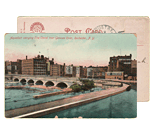

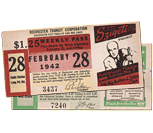


It has come to my attention that there are some pretty stalwart fans  of Tops Friendly Markets out there! That means this is the Filling In for you (as opposed to this one).
Posts Tagged ‘Matthew Denker’...

Filling In: Wegmans Plaza
Sunday, March 22nd, 2015Tags: East Avenue, East Avenue Wegmans, Filling In, grocery store, Matthew Denker, Rochester, Rochester NY, Top's Friendly Market, Wegman's, World Trade Center
Posted in Architecture, Urban Development | 27 Comments »
RocLinks 3/21/15
Saturday, March 21st, 2015![Midtown Plaza [PHOTO: Thomas Belknap/flickr]](http://rochestersubway.com/images/photos/denker/links/Midtown_Plaza.jpg)
Sorry for leaving everyone high and dry on the link front last week. Ironically enough, I was in Rochester, which complicated writing a RocLinks so much that I was unable to do so. That said, it was wonderful seeing/meeting so many of you, and my deepest apologies to any readers I missed while in town.
And now, from local development to just plain news of the weird, here are your RocLinks for this past week…
Tags: Corning Museum of Glass, Explore Rochester, Fuego, Matthew Denker, Midtown, Performing Arts Center, Public Market, Rooftop, Strath, Strathallan
Posted in Rochester Destinations, Rochester News | 12 Comments »
Filling In: Aldi
Monday, March 16th, 2015
Welcome back, readers. As you know, we’ve previously discussed things to do with Tops should Aldi be built at Winton Road and Blossom Road. There’s also been a discussion about how the construction of Aldi went in Irondequoit. Today, I’d like to take a look at a few reasonably simple changes that would completely change the tenor of the proposed development…
Tags: Aldi, biking, Blossom Road, Bus Stops, Development News, Filling In, grocery store, Matthew Denker, North Winton Village, Tops, urban planning, Wegman's
Posted in Architecture, Rochester News, Urban Development | 23 Comments »
Filling In: Philosophy
Wednesday, March 11th, 2015![[Detail of Genesee Crossroads Planning Map [PHOTO: Monroe County Image Library]](http://rochestersubway.com/images/photos/denker/philosophy/Genesee_Crossroads_South_detail.jpg)
I’ve been writing Filling in Columns for over 2 years now (starting with this one on Exchange Street), and I’ve realized that it’s high time to have a discussion about my vision for the column, what I write, and why I write it…
Tags: 34 King Street, 37 Eagle Street, 759 Park Ave, 93 Marsh Street, 933 University, Exchange Street, Filling In, infill development, Matthew Denker, Meta blogging, Midtown, Rochester, Rochester NY, Tops, urban development, Wegman's
Posted in Opinion, Urban Development | 10 Comments »
Filling In: 37 Eagle Street Part 2
Sunday, January 4th, 2015
Welcome to Part 2 of Filling In: 37 Eagle Street. It’s been a while, so to catch you up, in Part 1 my wife and I bought an empty lot at 37 Eagle Street in Corn Hill. But the fun doesn’t stop there. We decided to build ourselves a house on it, and we’re going to take you along for the ride!
Today I want to talk about architects. Just for starters, we decided we did not want off-the-shelf plans and would instead pay (about 10% of the overall project budget) for a house to be designed from scratch…
Tags: architecture, Corn Hill, custom home, Eagle Street, Filling In, Matthew Denker, real-estate, Rochester, Rochester NY, SWBR Architects, urban development
Posted in Architecture, Urban Development | 17 Comments »
A Tower for Rochester
Wednesday, December 3rd, 2014
Rochester has a nice skyline, although it’s not notably more impressive than some comparable cities like Des Moines, IA where the tallest tower is 801 Grand at 630 ft. or Birmingham, AL where the tallest tower is the Wells Fargo Tower at 454 ft. tall.
Tags: Bausch & Lomb tower, Legacy Tower, Matthew Denker, Rochester, Rochester NY, Rochester skyline, skyline, skyscraper, tower, Xerox Tower
Posted in Opinion, Urban Development | 59 Comments »
Filling In: 37 Eagle Street Part 1
Tuesday, November 18th, 2014Welcome to the first part of Filling In: 37 Eagle Street. I’d love to tell you how many parts to expect, but I don’t really know. What I can tell you is that this is the first Filling In about a real live project: my wife and I are building ourselves a house at 37 Eagle Street in Corn Hill.
So what gives? Why a house, you say? Well, I’ve always dreamed of building myself a house, and if you haven’t noticed from previous columns, I’m very much interested in developing Rochester. If that’s not a fortuitous intersection of desires, I don’t know what is…
Tags: Corn Hill, Eagle Street, Filling In, Matthew Denker, real-estate, Rochester, Rochester NY, urban development
Posted in Urban Development | 21 Comments »
Filling In: Midtown… Parcel 5
Thursday, November 6th, 2014
As some of you may or may not know, the city recently released a Request For Proposals (RFP) for the redevelopment of another piece of the Midtown site. Parcel 5 , the site in question, is the very long block from Main St to Elm St and between the Windstream building to the west and 1 East Avenue (Bank of America) to the east. Let’s go back to our trusty Midtown site plan for a visual…
Tags: architecture, City of Rochester, downtown Rochester, Filling In, Main Street, Matthew Denker, Midtown Plaza, Midtown Rising, New York City, Rochester, Rochester NY, urban development, urban renewal, urban revitalization
Posted in Urban Development | 21 Comments »
Filling In: 19 Eiffel Place
Wednesday, October 22nd, 2014
Welcome back to Filling In. As you know, we have a soft spot for city-owned property. And in fact, we really like city property that is currently up for sale or out for proposal right now. With that in mind, let’s talk about 19 Eiffel place…
Tags: City of Rochester, development, Eiffel Place, Filling In, Joseph Avenue, Matthew Denker, property for sale, Rochester, Rochester NY
Posted in Reader Submitted Stories, Rochester News, Urban Development | 3 Comments »
Rochester Museum and Science Center Expansion
Wednesday, October 15th, 2014
Rochester Museum and Science Center is planning an expansion to link the main museum building on East Avenue with the Strasenburgh Planetarium next door. The $7 million project will be paid for with the help of private donations and a variety of grants.
Now, most people seem to agree the link between the two buildings is greatly needed. However, since renderings were released last spring, the design aesthetic has been a hotly debated topic…
Tags: architecture, Christopher Brandt, development plans, East Avenue, Labella Associates, Matthew Denker, Rochester, Rochester Museum and Science Center, Rochester Museums, Rochester NY, SWBR Architects
Posted in Art + Culture, Opinion, Rochester Destinations, Rochester News, Urban Development | 10 Comments »
Filling In: Wadsworth Square & Marshall Street
Sunday, October 12th, 2014
This week on Filling In, we’re going to take a look at one of the sadder surface parking lot+grass field combos in the city. Sure it’s not the only one, but it’s sitting in a built up neighborhood, next to a local grocery store.* Indeed, the walk score of this location is a hefty 86. It’s not for a lack of ideas that nothing is here. Take a look at this prior effort…
Tags: City of Rochester, Filling In, Marshall Street, Matthew Denker, real-estate, Rochester, Rochester NY, Wadsworth Park, Wadsworth Square
Posted in Reader Submitted Stories, Urban Development | 20 Comments »
Filling In: Charlotte Part 3
Tuesday, May 20th, 2014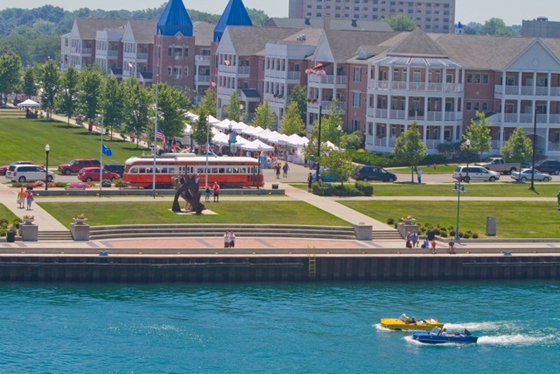
The following is a guest post submitted by Matthew Denker.
Submit your story today.
Welcome back to our three part series on Charlotte. We’ve arrived at part three. This is it, the omega. If you recall, all the way back in part one, we said this part would be broken up into three sections:
1. Residential and Commercial Development;
2. Transportation; and
3. Governance.
So without further adieu, let’s jump right in. Ok, one quick disclaimer, Charlotte as a whole is pretty big, too big for one little three part column. With that in mind, I’m cutting off Charlotte at Denise Road, similar to the other parts. Maybe someday I can write an addendum addressing the southern portion of the neighborhood. But enough of that – Onward!
Tags: Charlotte, development, Filling In, Matthew Denker, Port of Rochester/Charlotte, Rochester, Rochester NY, urban development
Posted in Opinion, Reader Submitted Stories, Rochester News, Urban Development | 44 Comments »
Filling In: 34 King Street
Sunday, May 18th, 2014
The following is a guest post submitted by Matthew Denker.
Submit your story today.
Dear readers, we interrupt our three part Charlotte series to give you a small morsel of something different before the grand finale. Consider this a palette cleanser, an intermezzo, if you will.
I looked up tired in the dictionary, and found this picture of 34 King Street in the Susan B. Anthony neighborhood. Seeing as the Carriage Factory lofts are being built immediately behind, I think it’s time for a major upgrade here. Allow me to present the all-new 34 King Street…
Tags: 34 King Street, City of Rochester, Filling In, Matthew Denker, real-estate, Rochester, Rochester home for sale, Rochester house for sale, Rochester NY, Susan B. Anthony Neighborhood
Posted in Reader Submitted Stories, Rochester Homes for Sale, Rochester News, Urban Development | 3 Comments »
Filling In: Charlotte Part 2
Thursday, May 8th, 2014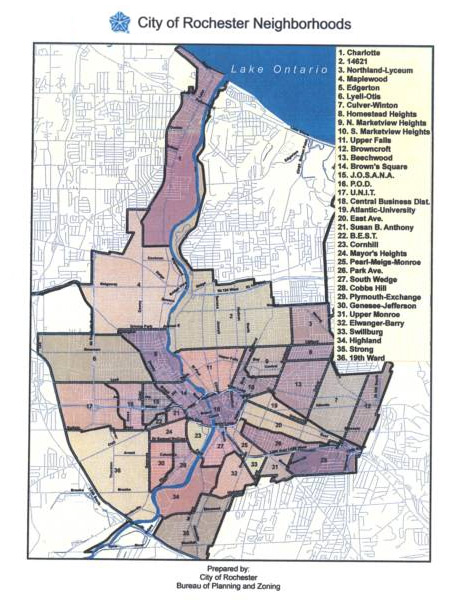
The following is a guest post submitted by Matthew Denker.
Submit your story today.
In part one of our three part Charlotte bonanza, we looked briefly at the history of Charlotte, from its formation in 1792, through its resort years and annexation in the early 20th century. In part two, we’ll look at Charlotte as it is today. Let’s start with the lay of the land. Shown above is the official definition of the city’s neighborhoods. As you know, Charlotte is the one at the top. Zooming in (and switching to Google maps) here’s what we see…
Tags: Charlotte, Filling In, Filling In Charlotte, Matthew Denker, Port of Rochester/Charlotte, Rochester, Rochester history, Rochester NY
Posted in Reader Submitted Stories, Rochester History, Urban Development | 7 Comments »
Filling In: Charlotte, Part 1
Wednesday, April 30th, 2014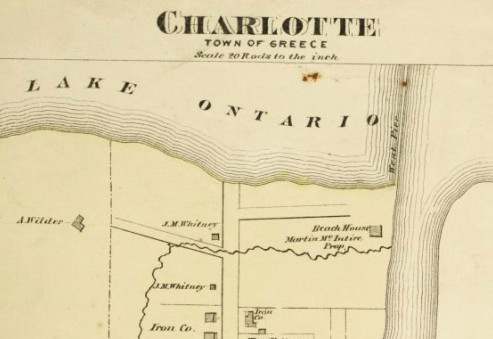
The following is a guest post submitted by Matthew Denker.
Submit your story today.
Welcome, readers, to the first of a three part series on Charlotte. This first part will serve as an introduction to the series and a brief history of Charlotte. The second part will be a survey, in the engineering sense, of the current state of Charlotte. It will include the demographics of the neighborhood and the built environment, as they exist today. Finally, the third part will layout a vision for Charlotte that works to harness all of the potential of the neighborhood. This final part will be broken into recommendations for residential and commercial development, transportation, and governance.
The plans described here will be ambitious, but we shouldn’t let ourselves shy away from ambition – as you may know, Charlotte has recently been in the news over some redevelopment plans. While Filling-In believes both plans have virtues, they both have numerous weaknesses as well. Because we are unassociated with any of the plans currently in play, and will believe they are built when we see it, the plans presented here will assume they did not happen, and instead will show a different vision of Charlotte’s future.
But now, we present a brief history of Charlotte.
Tags: Beach Avenue, Charlotte, Charlotte Beach, Filling In, Filling In Charlotte, Lake Avenue, Matthew Denker, old photos, old photos of Rochester NY, Ontario Beach, Ontario Beach Park, Port of Rochester/Charlotte, Rochester, Rochester history, Rochester NY
Posted in Reader Submitted Stories, Rochester History, Urban Development | 30 Comments »
NIMBY’s to left of me, NIMBY’s to the right
Wednesday, April 16th, 2014
The following is a guest post submitted by Matthew Denker.
Submit your story today.
Ok, so by now you’ve heard all the commotion happening up near the port at Charlotte. The City of Rochester has two development proposals – one with 200 rental apartments, and one with 120 for-sale condos and 50 townhomes. Both would have retail and other mixed use space. But the BIG difference, one looks like Cornhill Landing, while the other would have—deep breath—tall buildings…
Tags: brownfield development, Charlotte, Charlotte Beach, City of Rochester, development plans, Edgewater Resources, Lighthouse Landing, Matthew Denker, Morgan Development, Ontario Beach, Port of Rochester/Charlotte, Rochester, Rochester NY, urban development, Waterfront Rochester
Posted in Reader Submitted Stories, Urban Development | 68 Comments »
Rochester Wins Parking Madness Tournament! Hooray for us?
Wednesday, April 9th, 2014
Well, it’s time to celebrate. Rochester has just won the . To outsiders, Rochester is a Cinderella story (who in the world would have picked us to beat out Detroit in the second round?). But anyone who reads this blog is probably not surprised. We’ve been fighting the parking madness mindset on these pages for years. It’s just that now, the national blogosphere knows about Rochester’s dirty little parking problems. Our asphalt is hanging out there for the world to see.
How embarrassing. Right? Some people have asked, “Why would we want to win such a negative contest? Doesn’t this paint Rochester in a bad light?” Now the man who nominated Rochester, Matthew Denker, explains why he did…
Tags: downtown Rochester, Matthew Denker, parking, parking lots, parking madness, Rochester, Rochester NY, Streetsblog, urban planning
Posted in Reader Submitted Stories, Rochester News, Transit + Infrastructure, Urban Development | 15 Comments »
Filling In: 79 North Clinton
Friday, March 28th, 2014![A building in Portland, Oregon. [IMAGE: Google Streetview]](https://www.rochestersubway.com/images/photos/79-north-clinton-01.jpg)
The following is a guest post submitted by Matthew Denker.
Submit your story today.
Fellow Rochesterians, lend me your ears. I recently visited the reasonably pleasant city of Portland, OR. While I was there, I couldn’t help but notice a rather cleverly decorated, midcentury modern building. It was this one, actually…
Tags: 79 North Clinton Avenue, downtown, downtown Rochester, Filling In, Matthew Denker, North Clinton Avenue, Portland, Rochester, Rochester NY
Posted in Opinion, Reader Submitted Stories, Urban Development | 25 Comments »
Filling In: 93 Marsh Street
Thursday, February 20th, 2014![Matthew Denker ponders the possibilities at his new property at 93 Marsh Street. [IMAGE: Google Streetview]](https://www.rochestersubway.com/images/photos/filling-in-marsh-street-01.jpg)
The following is a guest post submitted by Matthew Denker.
Submit your story today.
Imagine you are the new owner of a giant, underutilized parking lot*. What would you do with it? Would you leave it as is? Tear out the pavement and start a community garden? What if there was an apartment building next to it. Would you tear it down and build a skyscraper? These are all excellent ideas. We here at filling in solicited input from a variety of fellow RochesterSubway.com contributors, and it’s clear that we all have different ideas about what to do…
*Disclaimer – I am a new part owner of a giant, underutilized parking lot. This one, in fact.
Tags: City of Rochester, development plans, Filling In, Genesee Street, Matthew Denker, Rochester, Rochester NY, vacant lot
Posted in Opinion, Reader Submitted Stories, Urban Development | 11 Comments »
Filling In: 446 Genesee St.
Thursday, December 5th, 2013![Matthew Denker looks at the feasibility of filling in this empty lot on Genesee Street. [IMAGE: Google Maps]](https://www.rochestersubway.com/images/photos/filling-in-446-genesee-street-01.jpg)
The following is a guest post submitted by Matthew Denker.
Submit your story today.
Welcome back, readers. It’s been a while. Today I’d like to look at a project that we could bring into the pipeline almost immediately. I say could, because there are almost assuredly zoning issues with what I’m proposing. That said, we could still get rolling on it immediately, because the site happens to already be on the market for $10,000! Let’s see what we’re getting for our money, what we’re building, and some numbers on the whole thing…
Tags: American Foursquare, architecture, cargo container architecture, Charleston Single, City of Rochester, Craftsman, development plans, Filling In, Genesee Street, Matthew Denker, Plover Street, Rochester, Rochester NY, vacant lot, Victorian
Posted in Opinion, Reader Submitted Stories, Urban Development | 6 Comments »