She’s a thing of beauty, don’t you think? Hundreds of thousands of square feet packed with mind-strengthening knowledge, all wrapped in 16 stories of brick and limestone, and capped off with 6,668 pounds of bronze bells. It’s the largest musical instrument in the city of Rochester, and also one of the top 50 research libraries in North America.
Proudly watching over the Eastman Quad , Rush Rhees Library at the University of Rochester seems to call out, “Come to me. Come to me and get your education on.” Personally, I’ve always wondered what the views are like from the top of that bell tower. What do you say we all climb up inside there and race to the top? Let’s go…
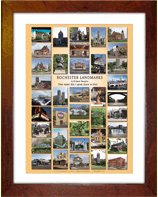
When I first moved to Rochester’s Swillburg neighborhood thirteen years ago, my favorite place to eat was Highland Park Diner. I remember this Rochester Landmarks poster, by Richard Margolis, hung over one of the booths there. I used to stare and study those landmarks all the while shoveling Aunt Bee’s Homestyle Meatloaf into my face. Ah, my first taste of Rochester. Today I own that poster, and I’ve now been to all but one of the 38 landmarks on it. It’s a great feeling!
Now you can get your hands on a copy of this Landmark poster from the RochesterSubway.com Gift Shop, and start checking them off your list too. Can you name all 38 landmarks? No peeking! The answers are after the jump…
This weekend, Wegmans closed their current East Avenue store so they could transition into their new, larger building . The new store replaces a historic area that was once the center of Brighton in the 19th century. The old Village of Brighton was served by the Erie Canal (now I-490). The canal was rerouted in the early 20th century and the entire area was annexed to the City of Rochester in 1905…
John Failings Barber settled in the area of Portage, NY during the pioneer days. He struggled with tragedy and hardship and eventually became a prosperous farmer and banker. He built this home—which he called, “Chestnut Place”—on the corner of Short Tract and Oakland roads . Before I continue, please be advised, this house is on posted private property.
Emily Stauring is a photographer from Arkport, NY. She took most of these photos while out for a drive with a friend…
“It’s one of the eeriest, strangest places I’ve ever been.” That’s what Chris Seward said of this little known spot on the University of Rochester campus when he took these photos. The Merle Spurrier Gymnasium opened in 1955 as part of a women’s center and the Susan B. Anthony women’s dormitory. Spurrier housed this 25-yard-long, six lane swimming pool. According to a 2004 Campus Times article , the pool has been closed ever since the women’s gym facilities were moved to the Robert B. Goergen Athletic Center in 1982…
Forty days after the insanity on Lake Road I thought I’d take a drive out there to see it for myself. To have some quiet time. And to reflect. These photos were taken on Saturday, February 2, 2013…
Rochester’s Pulaski Library (originally the Hudson Avenue branch) was the second permanent library constructed by the City. As explained here , the library was closed in 1994, and has sat unused until last week when the City opened the doors to potential buyers. If you’re interested, the City wants your proposal by March 4. $1,000 to buy it, but you’ve got to show you’ve got a serious plan to rehab the property. Historic tax credits and grants could help take a bite out of the million dollars it could cost you when all is said and done. If you missed the open house, here’s a look inside…
Yesterday, the archival photo blog, Shorpy , shared a great photo of the Babcock family from Rochester NY. The image is one of a collection of 38 photographs by Ralph Amdursky for the U.S. Office of War Information. The series shows how the Babcocks, a “typical American war worker’s family,” lived in 1943 during the height of WWII…
Scientists have known of the existence of DNA for over fifty years. But until recently , no one had ever seen a photograph of that tricky little double-helix. For the preservation community in Rochester, the image above could be just as big of a breakthrough as photographing DNA for the first time. We had a fuzzy idea of their existence, but until today no one had ever seen a map of the city’s Designated Buildings of Historic Value (DBHV). And I mean NO ONE. Not even the people who put the list together…
Last November I had the ridiculously huge privilege to give a talk at TEDxRochester. The gravity of the honor may have been too much for my little brain to comprehend. In fact, when they initially asked me to do it I said “no thanks” – twice. Long story short, I gave in. And I’m glad I did, because the experience was one of those “once in a lifetime” things.
Since much of my talk was influenced by you, RocSubway readers and participants, I thought you’d like to watch (and share) the official video which has just been released. A word of caution: I’m not the most riveting public speaker, but there is lots of good stuff buried within this 12-minute presentation, so watch thru to the end if you can…
Hopefully you caught yesterday’s story, “Rochester’s Adventure in Optimism” about the defunct Rochester subway. If you missed it give it a read. Originally published in the City Newspaper in 1983, the article mentioned the sole surviving subway car, car #60, and the effort to bring it back to Rochester and restore it to working order. Yesterday I received a more detailed explanation of those restoration efforts from Otto M. Vondrak, one of the trustees of the Rochester & Genesee Valley Railroad Museum in Henrietta, NY. Here’s the story of subway car #60 from Otto…
Sean Kirst began his career as a writer for City Newspaper (he’s now a columnist at Syracuse’s Post Standard ). He says he fell in love with the haunting feel of Rochester’s subway tunnels and was intrigued to learn the subway began taking off just after World War II. But at a critical moment, the system was basically dismantled by community leaders who were already thinking “interstates.” Sean dug into the story and wrote a fairly in-depth story entitled “Rochester’s Adventure in Optimism.” It was published in City Newspaper on June 2, 1983. Thirty years later, City Newspaper has graciously allowed RocSubway to share the story with you again, here…
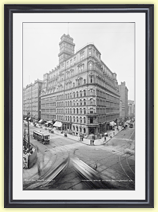
Here’s one heck of a photo – Rochester’s Main Street around the turn of the last century. It was snapped from a fire escape at 102 W. Main, near the corner of N. Plymouth Avenue, looking east. Make sure you click on the image and zoom all the way in for all the incredible detail. Across the street you’ll notice some pretty major landmarks. The most obvious one being Hotel Rochester on the far right…
I live in America’s first boom town—Rochester, New York—on Linden Street. Linden trees, unsurprisingly, line much of my street. Down the street is the Genesee River, once one of America’s most polluted—and possibly still. My street is a historic district that was once part of the world’s largest nursery. The Ellwanger and Barry Company supplied the first fruit trees to California…
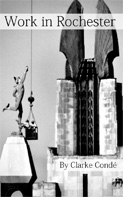
Ryan Green is a student at University of Rochester. Last month, after joining up with the University’s Urban Explorers (UrbEx ) club, he toured Rochester’s Times Square Building, formerly the Genesee Valley Trust Company . You probably know it by the enormous set of wings on top of it. Aside from maybe the Mercury statue, those “wings of progress” are easily the most recognizable element of Rochester’s skyline. And while they have a story all their own, there’s plenty more history to be found on the fourteen floors beneath.
Although the building is not open for public tours, Richard Calabrese Jr., who manages the property, says he likes touring the urban explorer group because of their genuine curiosity. Although, if a fundraising tour is requested, Calabrese says he’d consider that. “I have all kinds of history that I’ve learned over the years.” Ryan Green had such a good time touring the building, he wanted to share these photos, and his experience, with us…
It’s December 24, 1914, and two fashionably dressed little girls have Santa Claus cornered at the entrance to a downtown Rochester department store. And they are absolutely spellbound. Be sure to click on this image for a closer look. If this is not the definition of the holidays I don’t know what is. I like to imagine what the girls were saying at this moment; “Hey shouldn’t you be at the North Pole making our toys?! … Can we swing from your beard? … You know, you don’t look nearly as fat in real life, Santa.”
Yes, I am forever grateful to you, Mr. Photographer, for capturing this moment in time. A moment which would have otherwise been lost somewhere in the ether, has been wrapped up and handed to us with a great big bow. Yes, Virginia, Santa is real. Oh, and if you’re wondering where exactly this conversation with Santa took place…
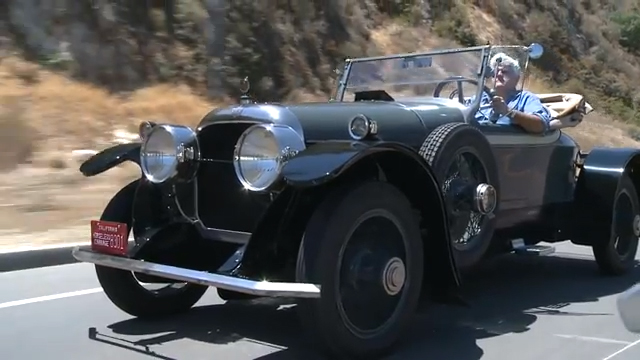
A friend of mine, Scott Wischmeyer (from Our Tiny Earth ), has been looking for ideas for a project car that he could start next summer. While looking, he decided to Google “Cars made in Rochester, NY.” What he stumbled upon next was a true American classic – the Cunningham car…
Here’s a fun birdseye view of Fitzhugh Street in downtown Rochester. This photo was probably taken from the roof of the Powers Hotel or the Powers Building on Main Street sometime between 1900 and 1910. The large building in the lower right is what we know to be City Hall, at the time the U.S. Federal Building and post office. To its left and across the street is (or was) the First Methodist Episcopal Church. And across the street and to the left of it was the First Baptist Church…
Get Email Updates...
Stay up-to-date on Rochester-related stories, artifacts, and ideas that you won't find in the mainstream news.
Totally free, never spammy, and you can unsubscribe at any time.
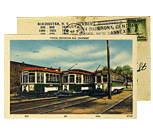
After the Erie Canal was rerouted south of downtown Rochester, the Rochester
Industrial & Rapid Transit Railway (the “subway”) was built in
its place as a link between the five different railroads and interurban trolley
lines that served the Rochester area. As the industrial landscape of Rochester
changed, and highways replaced the railroads, the Rochester subway gradually
became a relic of a bygone era. In 1956 the subway was abandoned and much of
its route was converted into Interstate 490 — built to connect Rochester
with the New York State Thruway (I-90). Read more about the history of the Rochester Subway.
RochesterSubway.com exists to help spark
public dialogue around how we can better connect the neighborhoods of Rochester
NY, surrounding communities, and their cultural offerings. Rochester’s
future is written in her past. Let's rediscover it.



















![University of Rochester's Rush Rhees Library, originally completed in 1930 and named for Rush Rhees, the university's first president (1900-1935). What do you say we climb up inside this? [PHOTO: RochesterSubway.com]](https://www.rochestersubway.com/images/photos/university-of-rochester-rush-rhees-library-01.jpg)
 , Rush Rhees Library at the University of Rochester seems to call out, “Come to me. Come to me and get your education on.” Personally, I’ve always wondered what the views are like from the top of that bell tower. What do you say we all climb up inside there and race to the top? Let’s go…
![Rochester Landmarks Poster [IMAGE: Richard Margolis]](https://www.rochestersubway.com/images/photos/rochester-landmarks-poster-richard-margolis.jpg)
![Former site of historic Brighton Village. March, 2010. [PHOTO: RochesterSubway.com]](https://www.rochestersubway.com/images/photos/brighton-village-east-avenue-wegmans-01.jpg)
![The old Barber House at the corner of Short Tract and Oakland Road in the Town of Portage. [IMAGE: Emily Stauring]](https://www.rochestersubway.com/images/photos/abandoned-barber-house-portage-ny-01.jpg)
![A little known abandoned swimming pool at University of Rochester. [IMAGE: Chris Seward]](https://www.rochestersubway.com/images/photos/university-of-rochester-abandoned-pool-01.jpg)
![40 days after the insanity on Lake Road. Rochester, NY. [PHOTO: RochesterSubway.com]](https://www.rochestersubway.com/images/photos/lake-road-rochester-01.jpg)
![Inside Rochester's Pulaski Library. [IMAGE: RochesterSubway.com]](https://www.rochestersubway.com/images/photos/rochester-pulaski-library-01b.jpg)
![The Babcocks, an American family. Rochester, NY. March, 1943. [PHOTO: Library of Congress]](https://www.rochestersubway.com/images/photos/babcock-family-rochester-ny-portrait.jpg)
![A map of Rochester's Buildings of Historic Value [Thanks to: Jim Fraser and Joseph Becker]](https://www.rochestersubway.com/images/photos/rochester-designated-buildings-of-historic-value-map-01.jpg)
![Mike Governale at TEDxRochester. Mike is a designer, blogger, and founder of a local public transit advocacy group, Reconnect Rochester. [PHOTO: Jeffrey Hamson]](https://www.rochestersubway.com/images/photos/TEDx-Rochester-2.jpg)
![The last remaining Rochester subway car... #60. [PHOTO: Christopher Hauf, Rochester & Genesee Valley Railroad Museum]](https://www.rochestersubway.com/images/photos/rochester-subway-car-60-RGVRRM-01.jpg)
![Cover of Rochester City Newspaper. June 2, 1983. [COURTESY: CITY Newspaper]](https://www.rochestersubway.com/images/photos/city-newspaper-rochester-subway-story.jpg)
![View of Main Street, Rochester, NY. c.1908. [PHOTO: Detroit Publishing Co. via Library of Congress]](https://www.rochestersubway.com/images/photos/hotel-rochester-main-street-1908.jpg)
![Lilacs in Highland Park, Rochester, NY. [PHOTO: Rich Engelbrecht, via Flickr]](https://www.rochestersubway.com/images/photos/lilacs-highland-park-rochester.jpg)
![A photo of a photo of a man atop the Times Square Building, Rochester, NY. [PHOTO: Ryan Green]](https://www.rochestersubway.com/images/photos/times-square-building-rochester-02.jpg)
![Rochester's RKO Palace Theater, September 1965. A sign is hung on the marquee proclaiming this the site of new $10 Million dollar twin towers. The theater was demolished and no towers were ever built on the site. [PHOTO: Courtesy of Rochester Theater Organ Society]](https://www.rochestersubway.com/images/photos/RKO-Palace-051-New10MillionDollarTwinTowers.jpg)
![Two little girls have a chat with Santa in front of the Duffy-Powers Department Store on the corner of W. Main and Fitzhugh Streets, Rochester, NY. Printed in Rochester Herald, December 24, 1914. [PHOTO: Albert R. Stone collection]](https://www.rochestersubway.com/images/photos/rochester-duffy-mcinnerney-santa.jpg)
![These men are standing around a hole in the sidewalk where John Hornby and James Kenney fell through on December 11, 1901. In the background is the Clemson Hotel, with Charles R. Holliger, proprietor, at 52 South Avenue. [PHOTO: Rochester Municipal Archives]](https://www.rochestersubway.com/images/photos/rochester-sidewalk-accident-01.jpg)
![Birdseye view of Fitzhugh Street, Rochester, NY. c.1904. [PHOTO: Detroit Publishing Co. via Library of Congress]](https://www.rochestersubway.com/images/photos/rochester-federal-building-fitzhugh-street-1904.jpg)